
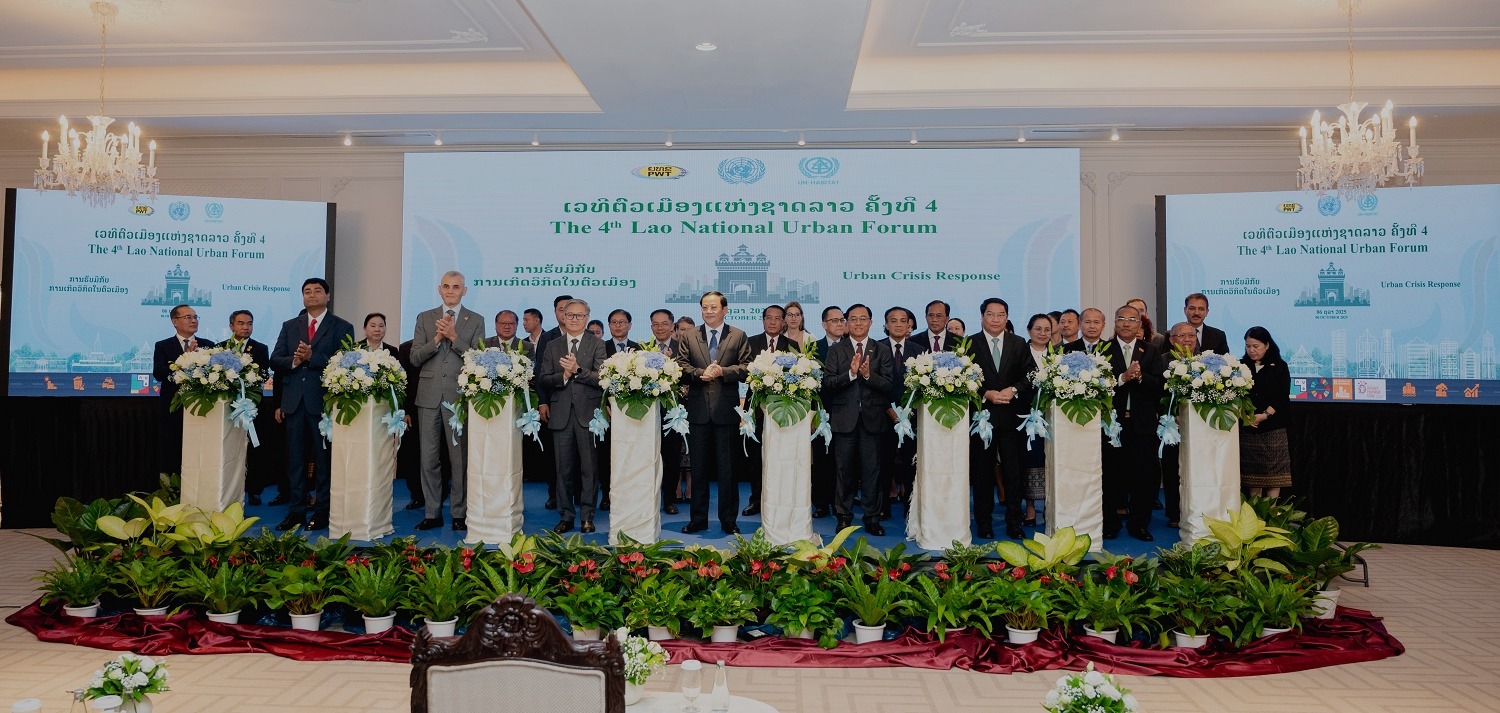
The Fourth Lao National Urban Forum (LNUF) opened in Vientiane Capital under the theme “Urban Crisis Response”, bringing together national leaders, provincial governors, development partners, academics, private sector actors, and community representatives to chart a course for more resilient and inclusive cities in Lao PDR.
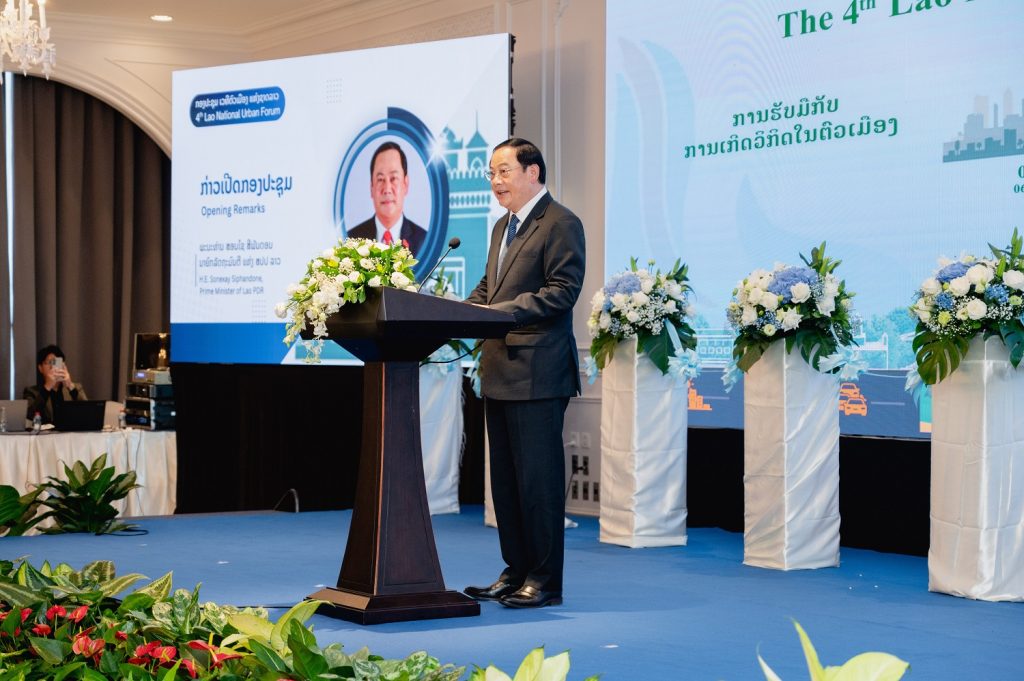
Presided over by H.E. Mr. Sonexay Siphandone, Prime Minister of Lao PDR, the Forum reaffirmed the country’s commitment to ensuring that its urban future is grounded in resilience, inclusivity, and solidarity. The Prime Minister emphasized that Lao PDR’s cities face critical challenges ranging from affordable housing and waste management to urban flooding and climate risks, which directly affect future development. He outlined the government’s priorities to expand access to clean water and sanitation, improve waste management, invest in public transportation and urban master planning, and strengthen the policy frameworks that underpin sustainable urban growth. He also expressed deep appreciation for the continued partnership with UN-Habitat and other development partners, stressing the importance of collaboration between government, the private sector, and civil society to achieve sustainable and resilient cities for all.
H.E. Mr. Leklai Sivilay, Minister of Public Works and Transport, welcomed the participation of all 18 provincial governors, which is an unprecedented milestone in the Forum’s history, and underlined the Ministry’s vision toward 2030, which integrates the New Urban Agenda into national urban planning. He reaffirmed that the Ministry views adequate housing as a fundamental right and that the LNUF provides a unique space for all sectors to share ideas and work toward cities that leave no one behind.
Marking two symbolic milestones – the 70th anniversary of Lao PDR’s membership in the United Nations and the 80th anniversary of the UN – Mr. Bakhodir Burkhanov, United Nations Resident Coordinator in Lao PDR, reminded participants that the country’s urban journey must continue to balance growth with inclusivity. He emphasized that urban expansion should not be halted but guided to ensure that it is sustainable, safe, and equitable, integrating rural–urban linkages and secondary cities into national planning.
Delivering a regional perspective, through a video message, Ms. Kazuko Ishigaki, UN-Habitat Regional Director for Asia and the Pacific, commended Lao PDR’s leadership and proactive approach to resilience. She highlighted that while disasters have affected over four million people and caused nearly USD 600 million in damages over recent decades, this data also points the way forward for action. Lao PDR, she noted, has clear opportunities to strengthen early warning systems, invest in resilient infrastructure, build local capacity, and ensure that governance is inclusive, with women, youth, and persons with disabilities actively engaged in shaping resilience. Ishigaki underscored that “urban resilience is national resilience,” emphasizing that by investing in safer, more inclusive cities, Lao PDR is protecting its development gains and advancing progress toward the Sustainable Development Goals.
In her video message, UN-Habitat Executive Director Anacláudia Rossbach congratulated the Government of Lao PDR for its leadership in sustainable urban development. She noted that with one of the fastest rates of urbanization in Southeast Asia, Lao PDR stands at a pivotal moment in determining how to turn rapid growth into an opportunity for resilience and prosperity. The Executive Director commended Lao PDR for being the first country in the Asia-Pacific region to submit its National Report on the New Urban Agenda and for following it with a second report this year, reflecting both strong commitment and regional leadership. She also welcomed the mobilization of 100 youth volunteers through the United Nations Volunteers (UNV) programme as an inspiring example of how sustainable urban futures are being shaped not only by policymakers but also by young people and communities.
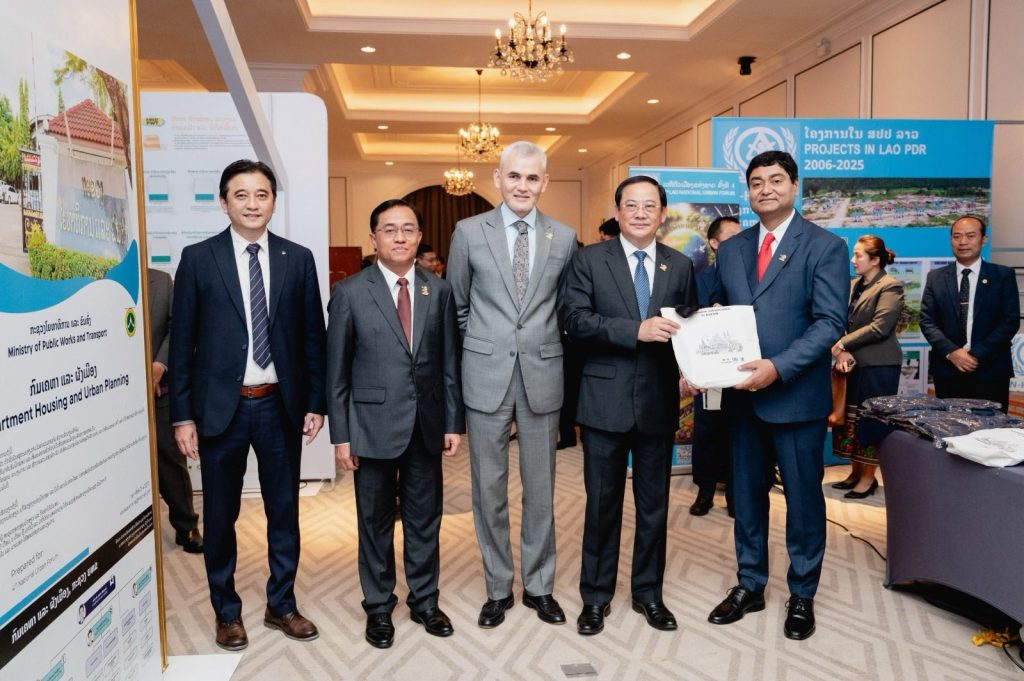
A key innovation of this year’s Forum is its dual-city format, with the second phase to take place in Pakse City on 17 October. This expansion aims to deepen engagement with the southern provinces, where local authorities are addressing the challenges of rapid tourism-driven urbanization, climate resilience, and service delivery.
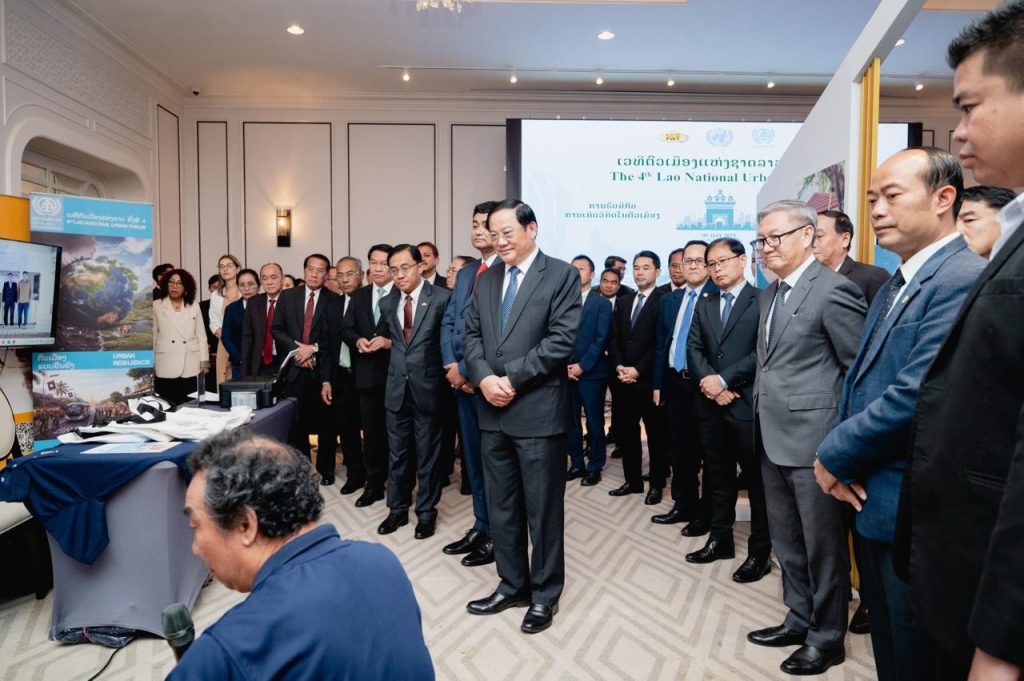
Exhibitions, thematic sessions, and dialogue panels explored topics such as climate adaptation, financing for resilience, housing policy, and integrating the country’s forthcoming NDC 3.0 into urban strategies. Discussions reaffirmed that well-managed urbanization can serve as a powerful driver of economic diversification and social resilience.
By the Forum’s close, participants expressed a shared commitment to strengthen governance frameworks, expand youth and community engagement, and embed crisis preparedness and response within local and national urban development strategies. Since its establishment in 2022, the Lao National Urban Forum has evolved into a cornerstone platform for policy dialogue and multi-stakeholder collaboration, guiding Lao PDR’s transition toward sustainable, inclusive, and resilient cities that leave no one behind.