Following the 2021 government takeover in Afghanistan, Eidi Mohammad, a 32-year-old father of two, lost his usual work and income suddenly. As a daily wage labourer, opportunities quickly disappeared, leaving him unable to support his family of four — his wife, his 8-year-old daughter Hasiba, and his 3-year-old son Edris. Facing mounting economic pressure, he made the difficult decision to go to Iran in search of more stable livelihood.
“I moved with my family to Iran in 2021 because I could not find any work in my village,” he recalls. “The journey was extremely difficult and full of risks.” Together with his family, he walked for days a very long distance to an unknown destination.
In Iran, Eidi found work at construction site and was able to enroll his daughter in school. “I used to earn around 800,000 Iranian tomans per day (approximately USD 6), and life felt more stable,” he says. Despite the challenges of living as an undocumented migrant, he was able to meet his family’s basic needs for several years.
However, Eidi’s hardship continued in the years that followed. The governments of Pakistan and Iran adopted policies and regularizations to return Afghan nationals to their own country already facing the impacts of decades of conflict and economic decline. According to UN OCHA, nearly 2.8 million Afghans were forcibly returned in 2025 alone. Eidi was among them.
At the Islam Qala border, which is a major crossing point between Iran and Afghanistan, Eidi’s family received initial emergency support from aid entities, but returning home brought immediate challenges. In his village in Zindajan, Herat, his father’s mud house where Eidi intended to live had been destroyed in the 2023 earthquake, leaving the family without adequate shelter.
Decades of conflict, displacement, and limited access to basic services have left many families like Eidi’s, struggling to rebuild their lives. Many have experienced repeated cycles of migration, displacement and returns, with long-term uncertainty about their future.
After his return to Afghanistan, Eidi spent months searching for work, like many other returnees, often alongside many other unemployed men in his community. Still, he held onto hope that an opportunity might emerge closer to home.
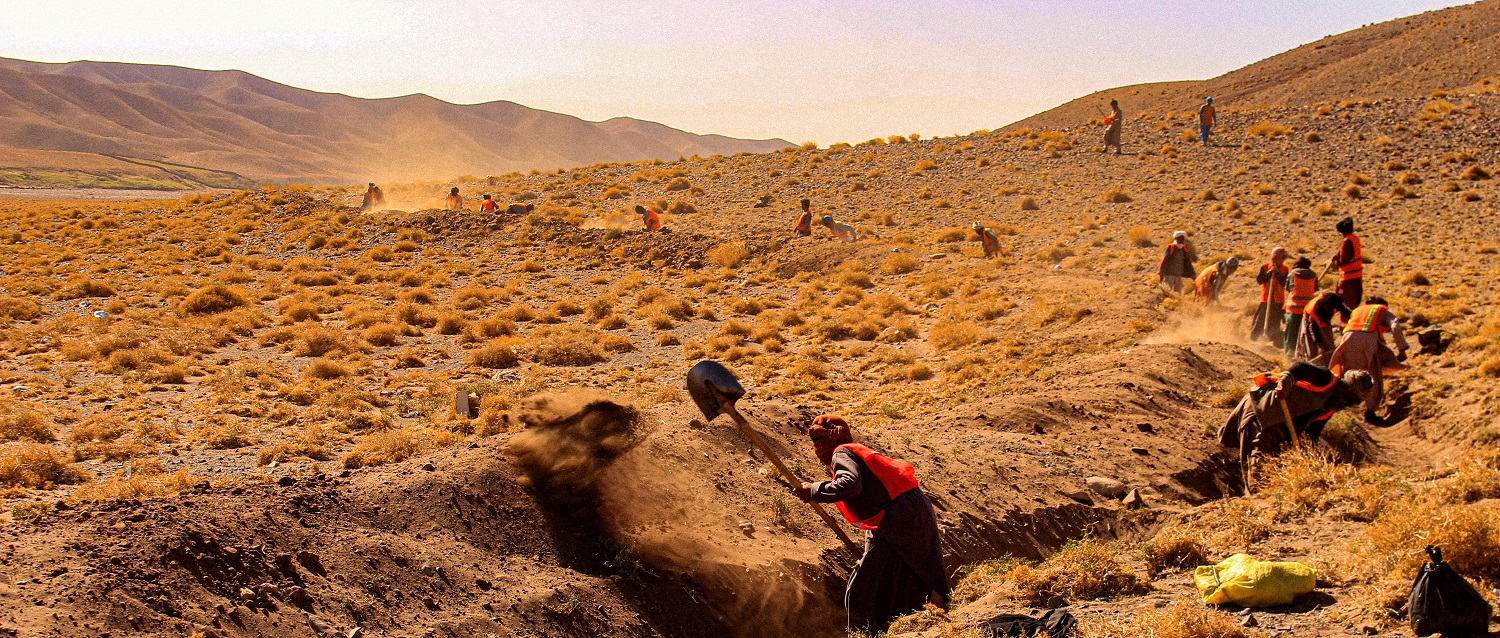
That opportunity came in October 2025, when he learned about the Cash-for-Work programme implemented by UN-Habitat with support from the Government of Japan through the Japa International Cooperation Agency (JICA). This activity was carried out as part of the project aimed at supporting a better recovery following the 2023 Herat earthquake.
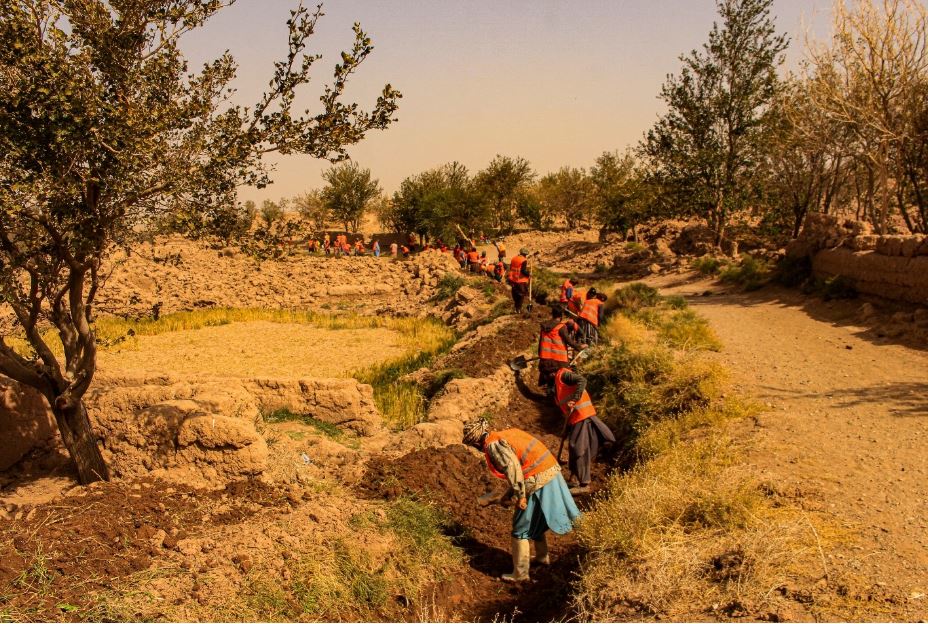
The programme provided temporary income generation opportunities while supporting the rehabilitation of essential community infrastructure, including cleaning irrigation canals, removing waste buildup, and leveling roads.
“For the first time, I could work in my own village and earn with dignity,” Eidi says.
Over 44 days, he earned a total of 15,400 AFN (approximately USD 5 per day), allowing him to purchase food and basic necessities for his family.
“Receiving wages for work in my own village felt like a dream,” he says, “I had lost hope because there was no work but with this programme sparks of hope lightened in our hearts again even though it’s a short-term opportunity.”
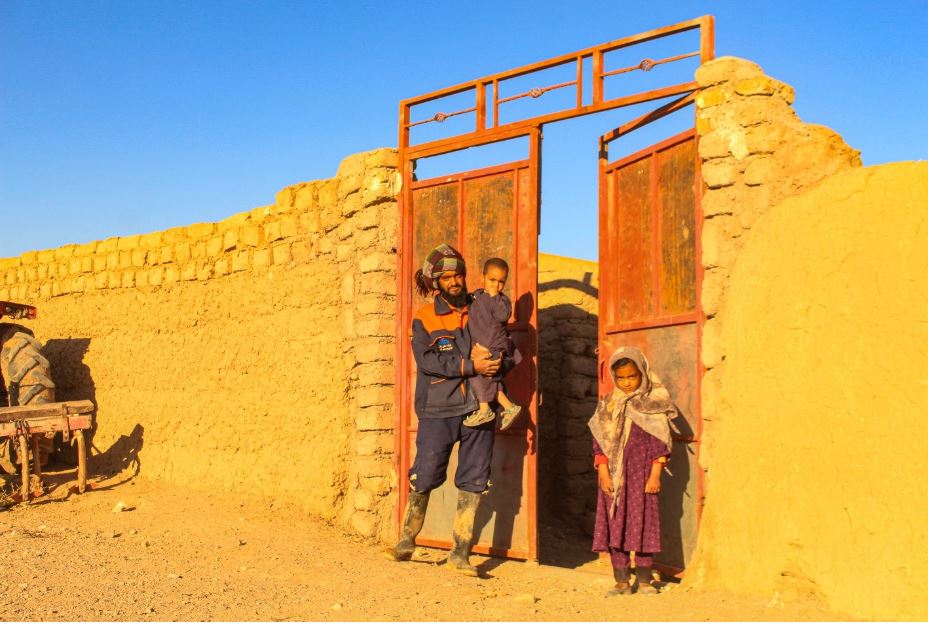
Through UN-Habitat community-based approaches, returnees like Eidi are not only gaining access to short-term livelihood support but also contributing to identifying and addressing local priorities. This helps strengthen community ownership while supporting recovery and reintegration.
While the support was temporary, it restored a sense of dignity and possibility. “I will continue to look for work,” Eidi says, “providing for my family is my top priority”
Across Afghanistan, many families like Eidi’s continue to face poverty and uncertainty. According to the Humanitarian Needs and Response Plan (HNRP) 2026, nearly 65% of the Afghan population is experiencing multidimensional poverty. Limited job opportunities and fragile economic conditions continue to challenge returnees as they rebuild their lives.