

27 October 2025, Phnom Penh, Cambodia – While urban areas are significant contributors to climate change, they are also particularly vulnerable to its impacts, including sea level rise, increased precipitation, inland flooding, and more frequent and intense heatwaves. Coastal areas in Cambodia are no exception.
Since August 2021, the United Nations Human Settlements Programme (UN-Habitat) and the Ministry of Environment/ the National Council for Sustainable Development (NCSD) have been implementing the Climate Change Adaptation through Protective Small-Scale Infrastructure Interventions in Coastal Settlements of Cambodia Project (CCA4CS), with financial support from the Adaptation Fund.
One of the target areas is Prey Nob District in Preah Sihanouk Province, where is located in the lowlands along the coastline and makes poor households sensitive to storm surges and sea level rise. To enhance the climate change adaptation and resilience of Prey Nob, the project rehabilitated the project implemented several interventions, including drainage system rehabilitation and resilient housing demo unit construction.
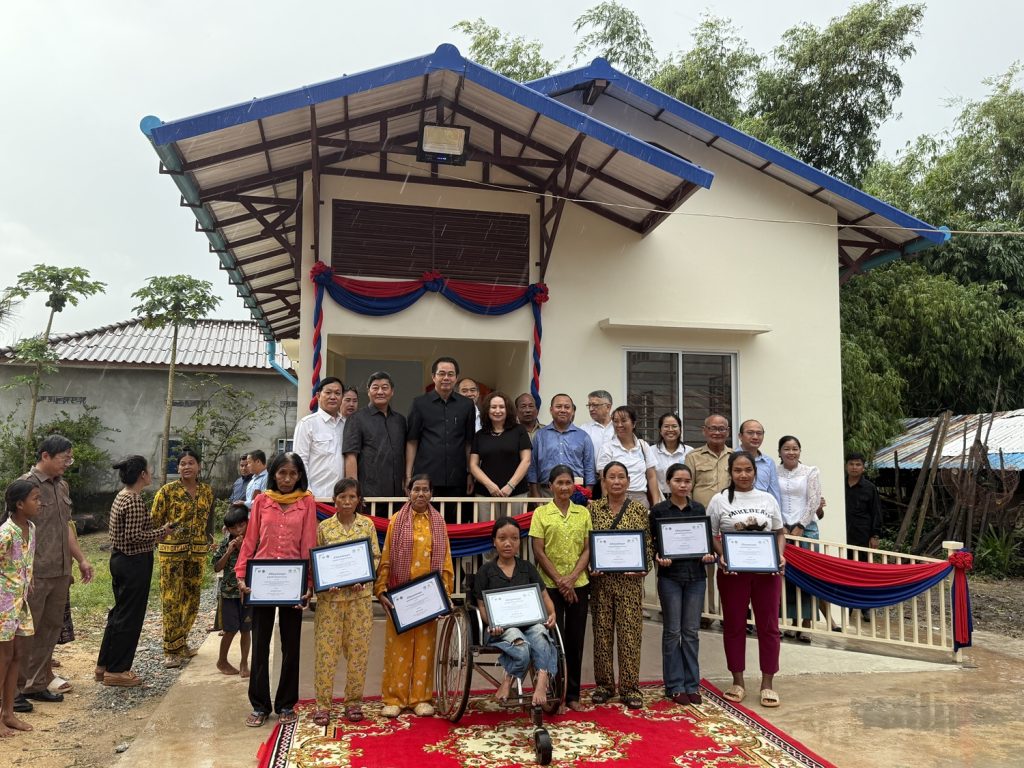
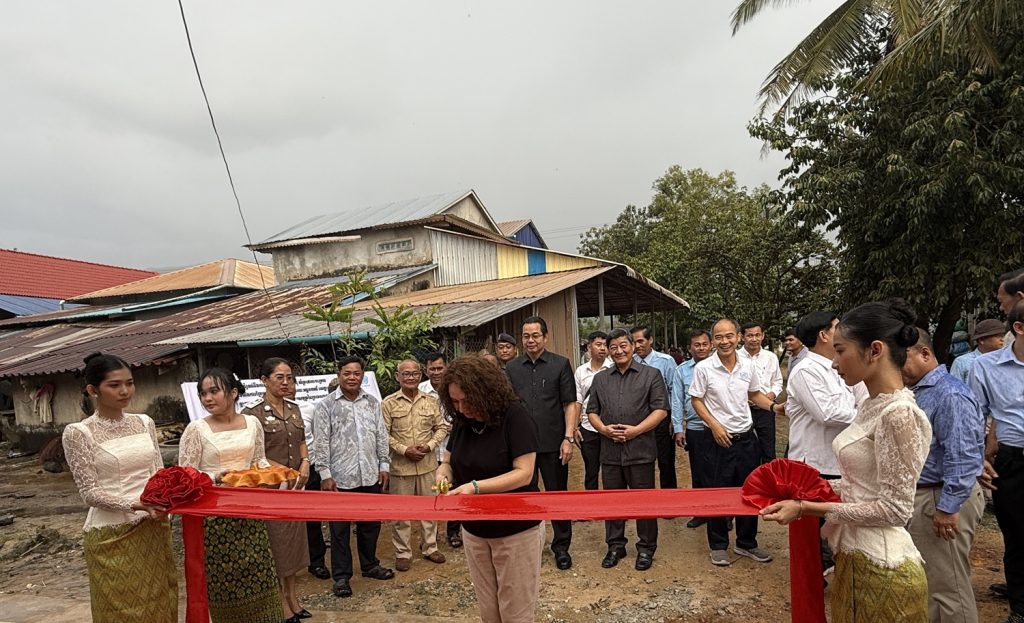
Handover Ceremony
The handover ceremonies for the additional drainage system rehabilitation and seven resilient housing demo unit constructions were held on 27 October 2025. The ceremonies were presided over by His Excellency Pheav Sovuthy, Under Secretary of State of the Ministry of Environment and Chair of the Project Management Committee, and Ms. Odicea Angelo Barrios, Human Settlements Officer of the UN-Habitat Regional Office for Asia and the Pacific. Many participants from line ministries, sub-national officials from Preah Sihanouk Province, and beneficiaries also attended the event. In total, 600 people (including [NUMBER] women) participated in the events to witness the project’s accomplishment.
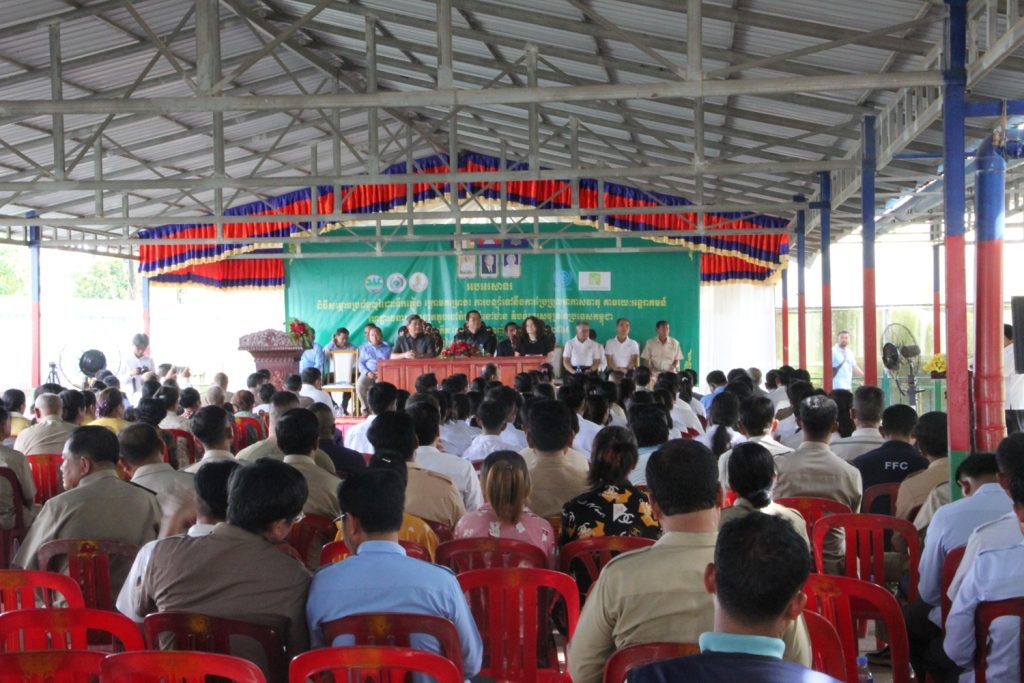
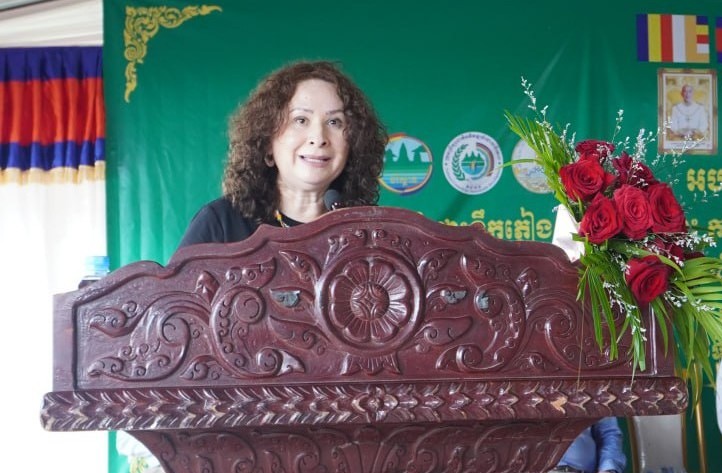
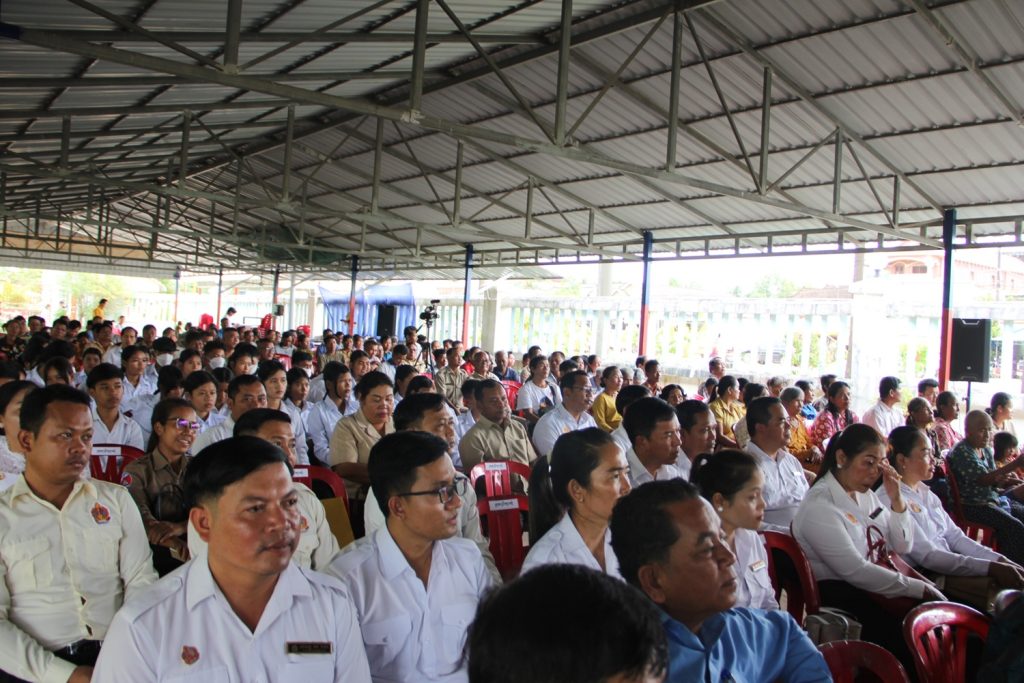
Ms. Barrios welcomed the participants by emphasizing the importance of cooperation and partnership with the NCSD/MoE, local authorities and communities from Preah Sihanouk province to work on a sustainable environment and climate change.
“The market sellers were suffered from flooding annually. However, we didn’t experience any flooding in the market this year because of the rehabilitated drainage system. We commit ourselves to collaborate with local stakeholders and maintain the functional drainage system,” said E Thearin, Prey Nob District governor.
H.E Pheav Sovuthy stressed “Climate change has become increasingly unpredictable, frequent, and severe, especially in coastal areas. This includes strong winds, storms, rising temperatures, changes in rainfall patterns, and saltwater intrusion into agricultural zones. Therefore, building climate-resilient infrastructure is a key mechanism to reduce disasters, strengthen resilience, and ensure sustainable development.
I recall that in August this year, there was heavy rainfall in Prey Nob District. The large amount of rainwater flowed down from the mountain behind the area, causing temporary flooding around Veal Renh High School and the district hall. Fortunately, we had already installed a high-quality and efficient drainage system. Once the rain stopped, our drainage system was able to discharge the stormwater immediately, preventing further flooding.
The seven model houses constructed to withstand climate change are strong, resistant to strong winds, and well ventilated with good natural lighting. I would like to encourage the project beneficiaries who are now living in these new homes to use and maintain them properly for long-term benefit, to live in a clean and healthy environment, and to plant more trees around their houses.”
H.E Mang Sineth, Preah Sihanouk provincial governor, highlighted that “Preah Sihanouk Province is a coastal province that is highly vulnerable to the impacts of climate change. The province frequently experiences strong winds, storms, flooding caused by heavy rainfall and blocked drainage systems, sea level rise during the month of November, and coastal erosion due to runoff, among others.
The construction of a drainage system of more than two kilometers in Veal Renh Commune is an important intervention that has improved rainwater drainage efficiency and reduced the risk of flooding in the area.
The model climate-resilient houses constructed under the CCA4CS project represent a significant contribution to environmental protection and the improvement of people’s quality of life. These model houses are not only modern residential structures but also serve as practical lessons in climate-responsive design. They demonstrate to local builders the importance of studying wind direction and applying proper construction techniques before beginning construction.
On this special occasion, I would like to encourage our people to carefully study this model house design before building new homes, in order to ensure better quality and stronger resilience against storms and strong winds. Likewise, I would like to call on local authorities to continue guiding local builders to pay close attention to construction techniques and to the safety of people’s homes.”