
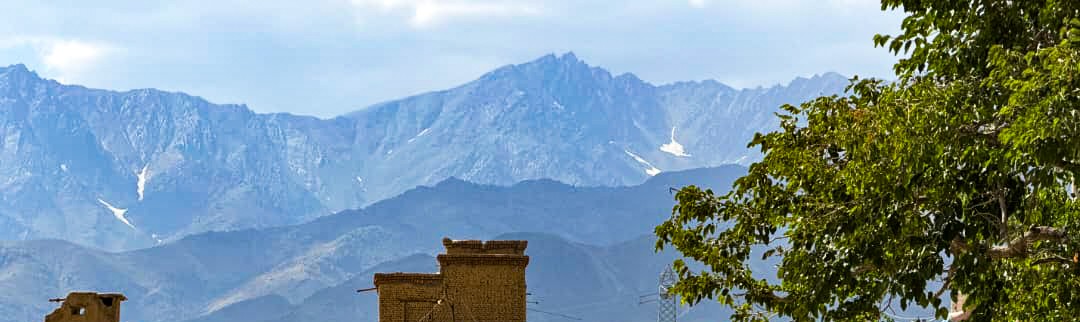
Throughout winter, the muddy, uneven road outside Tillah Mohammad’s home often made even short journeys a challenge. The 35-year-old father of four uses crutches to walk, and everyday journeys to the market, mosque and relatives’ homes could become a struggle.
“One day, I had difficulty getting through because standing water blocked my way. A car eventually came and helped me,” he recalls.
Tillah lives in Paghman, a district on the eastern side of Kabul, Afghanistan’s capital. He lost his left foot in a landmine explosion more than two decades ago and has used crutches ever since. For him, the poor road conditions added yet another obstacle to everyday life, “Even though the road is close to my home, its poor condition made travelling difficult” he said.
Even though the road was close to my home, its poor condition made daily trips difficult.
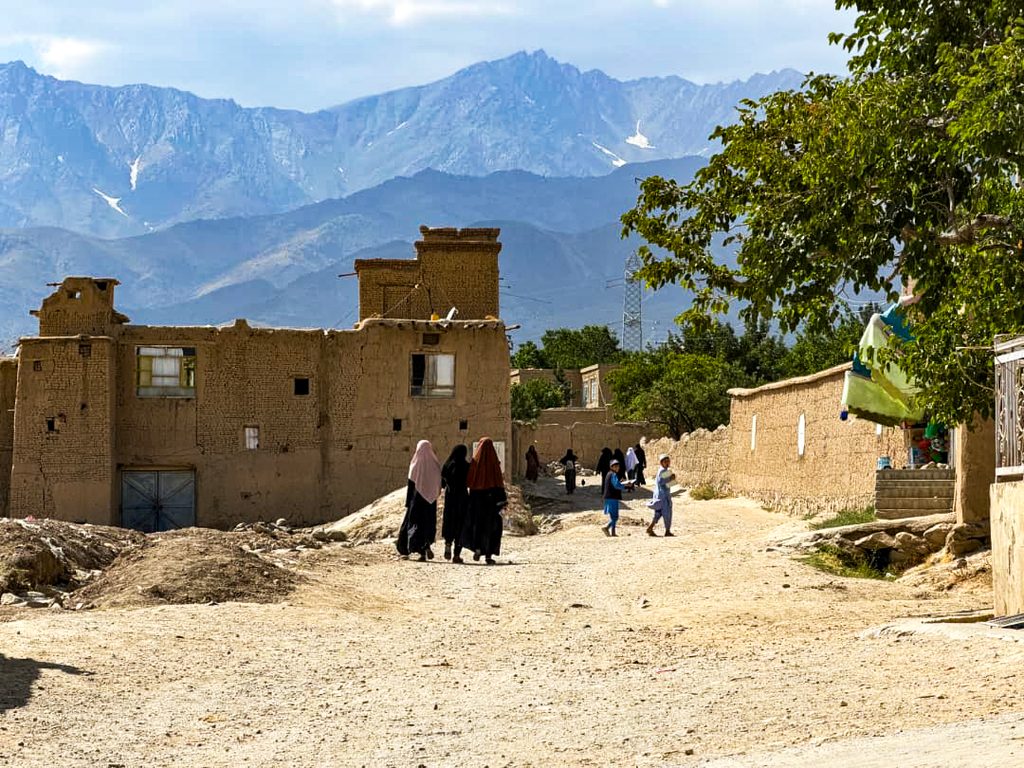
People in the neighbourhood had made efforts to improve the road themselves, using soil, gravel and other materials to even out its rough surface. But their efforts could not eliminate the challenges as the seasons changed. Residents had long hoped for a paved route that would be easier to use during winter and rainy weather.
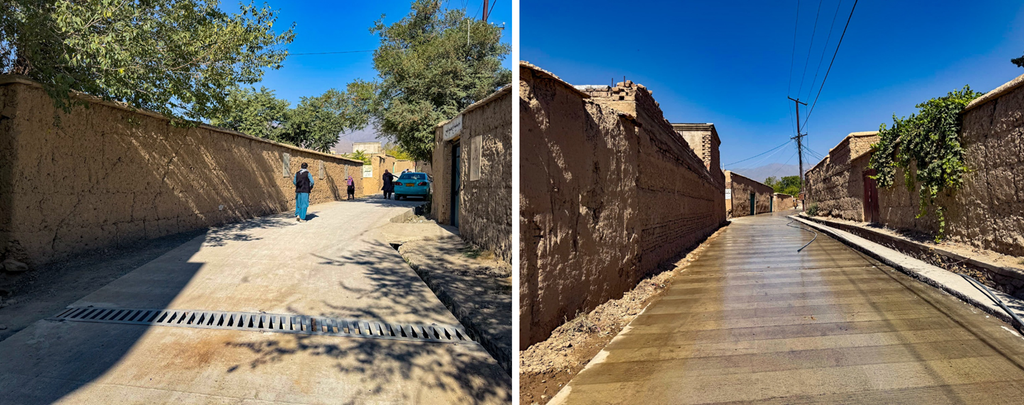
In 2026, that hope finally became a reality. With support from the Government of Japan through the Japan International Cooperation Agency (JICA), UN-Habitat constructed a 700-metre-long concrete road with roadside drainage, benefiting Tillah and around 1000 other families as it links families to the main road and market. Just one of 21 roads being built to improve living conditions in volunerable urban neighboorhoods.
Today, those familiar journeys take less effort. “Now, I reach my neighbors within minutes and moving around the neighborhood is much safer than before,” Tillah said. His four children also reach school more quickly. Khuram Dil, aged 6, Tillah’s youngest son notices the changes. “Now the road is clean and there’s no dust” he recalls. Like his father, Khuram has noticed how the improved road has made life easier for the family.
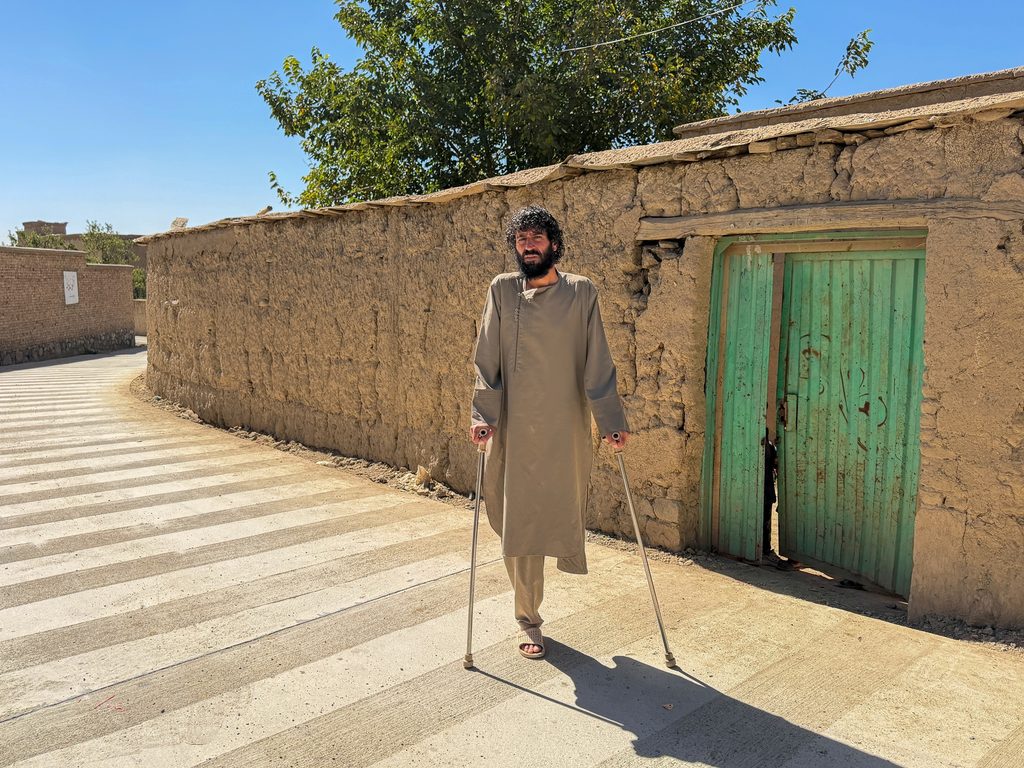
Tillah’s experience reflects a wider challenge in Afghanistan, where poor infrastructure can make everyday life more difficult for persons with disabilities. An estimated 1.5 million people live with significant disabilities across the country.
“The road has changed daily life for the whole community,” said Hassibullah, head of the local Gozar Assembly. “Before the improvements, children, women and persons with disabilities faced many challenges using this route. Today, daily life in the community is much easier.”
For Tillah, the road shows how a change in the neighbourhood can make difference to daily life. He wants to acknowledge the support that helped bring it about. “I would like to sincerely thank the people of Japan and JICA for their support in improving our road,” he says. “I hope that the people of Japan know how much these improvements mean to me and my community.”
I hope that the people of Japan know how much these improvements mean to me and my community.
For a man who has known this road in Paghman all his life, the improvement is not about finding new places to go. It is about reaching the places and people that have always mattered.